When orders are building up and dispatch deadlines are getting closer, it is tempting to think the answer is more staff or more space. Before making either investment, it is worth looking at how your warehouse is organised.
At Brysdales, we design storage solutions around more than capacity. Being able to access stock, pick efficiently and move safely through the warehouse matters just as much as how much you can store. From manual racking and shelving to automated systems, we help businesses make better use of their space.
For ecommerce, logistics and distribution operations, the question is straightforward: does your storage layout help people get orders out, or make the job harder?
Here are the areas we recommend reviewing when you want to improve picking efficiency.
Start With How Orders Move Through Your Warehouse
Before changing your racking, take a closer look at a typical order. Follow it from the moment picking begins through to packing and dispatch.
Ask your team:
- Where do they spend time walking rather than picking?
- Which locations are difficult to access?
- Where do queues or bottlenecks develop?
- Do they regularly find empty pick locations?
- Which products are difficult to identify?
- Are there repeated trips between the same areas?
We recommend combining order data with feedback from the people doing the work. A floor plan shows where your equipment sits, but watching the process reveals where it becomes awkward.
Use those findings to set clear priorities. You might need shorter routes, better stock availability at the pick face or more space around packing stations. Define the problem before choosing the equipment.
Design Racking Around Access, Not Just Capacity
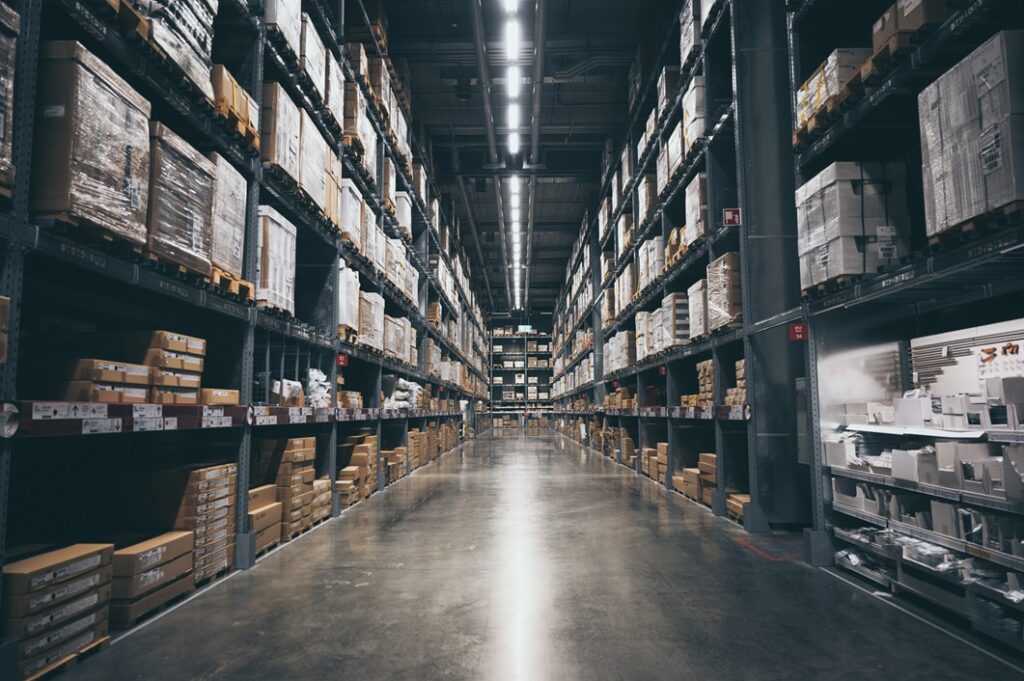
Fitting more stock into a warehouse is useful only if you can retrieve it efficiently. Storage design needs to balance capacity with loading, picking, stock rotation and safe movement through the building. That balance is central to our approach at Brysdales.
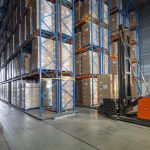
Choosing the right racking system is part of that process. Selective pallet racking provides individual access to each pallet, while drive-in racking offers higher-density storage. Very narrow aisle (VNA) racking can increase capacity within a limited footprint but requires specialist handling equipment. For long or awkwardly shaped products, such as timber and pipes, cantilever racking provides an open design that makes stock easier to access. We will help you match the system to your products and workflow, rather than choosing on capacity alone.
When reviewing your layout, consider how each aisle connects to the next stage of the process. We suggest checking whether pickers can move towards packing without unnecessary backtracking and whether replenishment activity interferes with picking.
Avoid treating narrower aisles as an automatic improvement. Discuss aisle requirements alongside the handling equipment, loads, operating methods, and safety arrangements.
The aim should be a layout that works during a busy shift, not simply one that looks compact on a drawing. Test proposed changes against your busiest order patterns before committing to them.
Give Frequently Picked Products Suitable Locations
Stock positioning, often called slotting, deserves as much attention as the racking itself. Warehouse slotting can use demand, product quantities, dimensions, and other requirements to plan picking locations and the replenishment needed to supply them.
Start by reviewing how frequently each product appears on orders. We recommend considering accessible locations for your most frequently picked lines, rather than allocating space solely according to how much stock you hold.
However, do not move every popular product into one small area without checking the consequences. Test whether the proposed arrangement creates congestion or leaves insufficient room for replenishment.
Also consider:
- Product size and weight.
- The quantity normally picked.
- Seasonal changes in demand.
- Products commonly ordered together.
- Handling and stock-rotation requirements.
Treat your first arrangement as something to review, not a permanent answer. Revisit it when demand or your product range changes.
Choose Shelving That Fits the Picking Task
Not every product needs the same storage system. At Brysdales, our shelving solutions cover small and medium parts, bulk storage, and other specialist requirements, with designs focused on capacity, picking, and product protection.
For smaller items, consider whether bins or clearly divided locations would make identification easier. For cartons, review shelf dimensions and access rather than choosing shelving purely by its overall capacity.
Dynamic storage may also be worth assessing. Carton flow systems use inclined tracks to bring stock towards the picking position. Suitable systems can separate rear replenishment from front picking and support first-in, first-out stock rotation.
The important point is to match the system to the product and process. Consider stock volumes, packaging, replenishment frequency, and the way orders are picked before deciding whether static shelving or a flow-based solution is appropriate.
Make Pick Paths Deliberate
Once stock has suitable locations, review the routes used to collect it.
We suggest walking several representative orders through the warehouse. Include a small order, a larger order and one containing products from different zones. Note where the route doubles back or sends someone through an already busy area.
Then test alternatives. Could the pick list follow a more logical location sequence? Would a different starting point work better? Could commonly repeated journeys be combined?
Batch picking is worth considering when several orders include the same products. By collecting items for multiple orders in one trip, your team can reduce repeated journeys through the warehouse. Clear shelving layouts and digital checks can help keep picks organised and stock records up to date.
Do not assume one route or method suits every operation. Trial changes with real orders and include packing and sorting in your assessment.
Make Locations Easy to Identify
Give your team a location system that is straightforward to follow. We recommend a consistent format covering the aisle, bay, level, and individual position.
For example, a reference such as B-04-02 could identify a particular aisle, bay, and shelf level. The exact format matters less than using it consistently across labels, pick instructions and stock records.
Where barcode verification is available, consider using it to confirm the location and product during picking. Digitally supported picking systems can provide article and order verification alongside live stock updates.
During your review, check for damaged labels, unclear descriptions and neighbouring products that look similar. Ask a new team member to find a selection of items using only the instructions provided. It is a useful way to test whether the system relies too heavily on local knowledge.
Plan Replenishment Alongside Picking
A well-positioned pick face still needs enough stock to support the work planned for it. Warehouse slotting tools can calculate demand and generate replenishment work to bring the appropriate inventory into picking locations.
When designing those locations, consider both accessibility and the amount of stock they need to hold. We recommend reviewing how often each location runs empty and whether replenishment is taking place at inconvenient times.
Look at reserve storage too. Ask whether replenishment routes are practical and whether topping up stock blocks active picking areas.
For suitable products, carton flow storage offers separate replenishment and picking faces, which can help keep these activities apart.
Include replenishment effort in any comparison of layouts. A change should be assessed across the whole process, rather than judged only by the picker’s walking distance.
Use Automation Where It Solves a Clear Problem
Automation is worth exploring when you can identify the task you want it to improve.
At Brysdales, our intralogistics range includes autonomous mobile robots, tote shuttles, pallet shuttles, and cage-moving systems. These provide different approaches to transporting, storing, and retrieving goods, depending on the operation.
Rather than starting with a particular machine, start with questions:
- Is repeated transport between workstations the main issue?
- Does retrieval from storage limit throughput?
- How variable are orders and demand?
- What systems need to integrate?
- What capacity will you need as the business grows?
Automation and storage should be assessed together. We tailor solutions to the space and workforce, bringing design, installation, and operational requirements into the discussion.
Build the investment case around your own volumes, costs, and service requirements, rather than assuming a technology will deliver the same result everywhere.
Keep Safety Within the Design Brief
Efficiency improvements should not come at the expense of safe storage. At Brysdales, we provide racking inspections, maintenance, training, and load notices as part of our storage compliance services.
Before altering an existing system, seek advice on the proposed changes and how they affect its intended use. Include access, handling equipment, and load requirements in that discussion.
Do not confuse stock-location labels with load notices. They serve different purposes: one helps people find products, while the other communicates the storage equipment’s load limits.
Make safety part of the initial brief, rather than something checked only after the new layout has been agreed.
Measure the Results and Keep Reviewing
Before making changes, record a baseline. We suggest tracking picking time, travel, errors, replenishment interruptions, and the time taken to get orders ready for dispatch.
Compare results using similar order types and workloads. Include feedback from your team, particularly where a change looks promising on paper but proves awkward in practice.
You do not necessarily need to redesign everything at once. Consider trialling one zone, refining it and then deciding whether to extend the approach.
Make Your Storage Work Harder
At Brysdales, we bring over five decades of storage experience to businesses in warehousing, logistics, retail, and ecommerce. Our range includes racking, shelving, materials handling equipment, and warehouse automation.
If your team is spending too much time walking, searching, or waiting, let us discuss how your storage could work better.
Call us on 01257 240 000 to talk about your warehouse requirements.